


Woot! Deals and Shenanigans
4.49.91K Reviews
App Specs
- Version
- 6.2.2
- Updated On
- License
- Free
- Downloads
- 1,000,000+
- Developer
- Woot.com
- Categories
- Shopping
- Platform
- Android
Screenshots



 Analysis by AppCompare
I approached Woot! Deals and Shenanigans as a shopping app with a personality problem in the best possible sense: it wants to help me find bargains, but it also wants the browsing experience to feel entertaining. That combination is the central reason to use it. This is not the app I would open when I have already chosen a precise product and want the fastest possible checkout. I see it as a place to look around, compare unexpected offers, and decide whether something is worth buying before the moment passes.
My overall view is positive, with an important qualification. Woot.com has built an app that makes deal hunting more engaging than a conventional catalog, and its 4.4 average from around 22 thousand ratings suggests that many shoppers appreciate that approach. At the same time, the playful style can make the experience less direct than a standard retailer. If you enjoy discovering products, the app has real appeal. If you dislike browsing without a firm destination, it may feel more distracting than useful.
What makes Woot different from ordinary shopping apps
The app belongs to the shopping category, but I would not judge it by the same standard I use for a large general marketplace. A typical retailer is organized around search, filters, product pages, and predictable buying journeys. Woot leans more heavily into daily deal discovery, rotating attention toward selected offers and best sellers rather than treating every product as equally important.
That difference changes how I use it. Instead of opening the app with a complete shopping list, I would check it during a spare moment, especially when I am curious about what is available. The experience works best when I am willing to browse and evaluate. The humor and informal tone make that browsing less dry, but the personality is not just decoration: it sets the expectation that shopping here involves surprise and timing.
The developer is Woot.com, and the app is free to install. It is rated for Everyone 10+, which fits the casual shopping-and-entertainment mix. It has been available since November 10, 2015, and the current version is 6.2.2. Compatibility starts with Android 7.0, so people using older devices should check their software before planning around it.
One of the app’s practical strengths is that it gives me a reason to return even when I am not searching for one specific item. Best sellers can provide a quick starting point, while the deal-focused presentation encourages me to look beyond familiar brands or routine purchases. That can be useful for gifts, household extras, accessories, and occasional impulse buys where I am open to alternatives.
How I would use it in an ordinary day
Imagine that I am waiting for a train and remember that I need a small gift for a friend, but I do not yet know exactly what to buy. In a conventional shopping app, I might search for “gift” and receive a huge, repetitive list. In Woot, I would browse the featured deals and best sellers first, using the app as a source of ideas rather than a simple search box.
Worth Reading Before You Choose

EA SPORTS FC Mobile 26 Is a Bigger Football Game, but It Takes Time

Flipboard Shows What News Apps Must Do Beyond the Feed

Switching to Android Auto Means Rethinking Your Driving Routine

Google Calendar Makes a Crowded Week Easier to Manage

Ludo King Makes the Most of the Minutes Between Plans

Baby Panda World Brings Quick Play to Modern Phones, but Its Game Library Feels Busy
Once I find something interesting, I would slow down instead of treating the discount or presentation as an automatic reason to buy. I would check the product details, consider whether it solves the original need, and compare the final decision with alternatives I already know. This is an important workflow: use the app for discovery, then switch into deliberate evaluation before spending money.
That extra pause matters because the most entertaining part of a deal app can also be its biggest trap. A product can look appealing because it is presented as a limited opportunity, even when it is only a moderate fit for me. I find Woot more useful when I decide in advance what kind of purchase I am willing to make and avoid letting the app define my needs for me.
The strongest reason to keep it installed
For me, the strongest case is the combination of deal discovery and a lighter browsing experience. Many retail apps feel like databases. They are efficient when I know the exact item, but they do little to make casual exploration enjoyable. Woot’s tone gives the catalog more character, which can make a short browsing session feel like a small break rather than an errand.
The store summary describes shopping daily deals, browsing best sellers, and having a laugh along the way. In practice, I interpret that as a clear promise about the app’s role: it is designed for people who enjoy seeing what is available today, not only for people who arrive with a fixed product code in mind. That focus makes it easier to understand why the app may feel more satisfying than a standard retailer for some shoppers and less satisfying for others.
I also like the way best sellers can act as a shortcut when the broader selection feels too open-ended. Rather than scrolling indefinitely, I can begin with items that already attract attention and then decide whether any of them are relevant. This is not a replacement for careful comparison, but it is a useful way to reduce the feeling of starting from nothing.
Another non-obvious advantage is that the app can support a two-stage shopping habit. I can use it first as a discovery tool and later as a reminder of ideas I want to investigate elsewhere. That makes it valuable even when I do not complete a purchase inside the same session. A deal app does not have to be the final authority on value to be helpful; it can broaden the options I consider.
Where the playful approach becomes friction
The same personality that makes Woot memorable can make it harder to shop with precision. When I want a particular specification, size, color, or product family, I generally prefer a retailer whose entire interface is built around narrowing results quickly. Woot’s appeal is strongest when I am open to being surprised, so it is not automatically the best tool for urgent or highly specific purchases.
I also think the deal-oriented atmosphere requires more self-control than a plain catalog. The presentation encourages a sense of immediacy, and that can push me toward a purchase before I have asked the basic questions: Do I need this? Is it suitable for my situation? Would I still want it without the excitement of the offer? Those questions are not a criticism of one particular listing; they are part of using this style of shopping responsibly.
There is a second trade-off in browsing. Discovery is enjoyable when I have time, but it can become inefficient when I am trying to compare several competing products. A conventional marketplace may be better for checking a range of specifications side by side or finding the exact version of an item. I would not make Woot my only shopping app if comparison depth and predictable navigation were my top priorities.
My practical advice is to separate entertainment from evaluation. Browse when you have a few quiet minutes, but before buying, read the full product information and think about the total usefulness of the item. Treat the deal framing as a prompt to investigate, not as proof that the purchase is right. That small change makes the app more valuable and reduces the chance of collecting things that seemed exciting only in the moment.
Who will get the most from it
I would recommend Woot to shoppers who enjoy unexpected finds, rotating deals, and casual product discovery. It is particularly suitable for someone who likes checking a shopping app without a strict agenda, looking for gift inspiration, or finding occasional household and personal items at an appealing opportunity.
It also suits people who appreciate a little humor in an otherwise routine activity. The informal voice helps distinguish the app from sterile retail interfaces, and that can make returning to browse feel less like administrative work. If you already enjoy deal newsletters, bargain hunting, or browsing best-seller lists, the app’s style should feel natural.
I would be more cautious about recommending it to someone who wants a single-purpose buying tool. If your priority is entering an exact model number, comparing every available seller, or moving through a completely predictable purchase path, a traditional retailer may be a better fit. The app is not a poor choice in that situation, but its main strength is not precision-first shopping.
It is also not ideal for anyone who tends to make impulse purchases easily. The entertaining presentation may make browsing more tempting, and the right response is not to blame the app for that but to set a personal rule before opening it. I would decide on a budget, a type of item, or a genuine need in advance. That turns casual browsing into a controlled search rather than an open invitation to spend.
Useful habits for getting better results
My first tip is to open the app with a purpose, even if that purpose is broad. “Find a small gift” or “look for a useful home item” is enough. A loose boundary keeps the browsing experience fun while making it easier to reject products that do not fit anything in my life.
My second tip is to revisit the product page after the initial excitement has faded. A quick first impression is good for discovery, but a second look is better for judgment. I would check the important details, consider how often I would use the item, and compare it with something I might already own. This is especially helpful when the deal framing makes an ordinary product feel unusually urgent.
My third tip is to use best sellers as a starting filter, not as a personal recommendation. Popularity can help me avoid an overwhelming blank page, but it does not tell me whether a product matches my needs. I would use that section to generate candidates, then make the final choice based on suitability and value.
A fourth useful habit is to treat the app as part of a wider shopping workflow. I might discover an idea in Woot, verify that it fits my needs, and then decide whether to buy it there or continue researching. This keeps the app’s strongest feature—discovery—from becoming a weakness when I need more methodical comparison.
Everyday value, platform details, and expectations
With more than a million installs, the app has reached a substantial audience, and its rating profile shows that it is not an obscure experiment. Still, popularity should not be confused with universal suitability. The experience depends heavily on whether I enjoy browsing selected deals or prefer a comprehensive, search-led store.
The app is free, which makes trying it low-risk in terms of installation cost. The more meaningful question is whether its shopping style fits my habits. I would install it on a compatible Android device if I wanted another source of bargain ideas, but I would not expect it to replace every other retailer I use. Its value comes from the type of attention it creates, not from being the answer to every shopping task.
The age rating of Everyone 10+ is another small indication of the app’s tone: it is positioned as accessible shopping with playful content rather than as a specialist professional tool. That makes it easy to recommend for general browsing, while still leaving the responsibility for purchase decisions with the user. I would explain that distinction to younger users and encourage them to involve an adult before buying anything.
Because the current version is 6.2.2 and the minimum Android requirement is 7.0, most reasonably modern Android users should at least be able to consider it. Owners of older phones should check compatibility first rather than assuming every shopping app will run. That is a simple step, but it avoids planning a shopping routine around an installation that the device cannot support.
My verdict after weighing the trade-offs
Woot succeeds because it understands that shopping can be about discovery as much as transaction. I enjoy it most when I have time to browse, want ideas rather than one exact item, and appreciate an app that does not sound like a formal catalog. The daily-deal focus and best-seller browsing give me a clear reason to return, while the humor makes the process more distinctive.
Its limitation is equally clear: the app’s personality and deal-led structure are not a substitute for rigorous comparison. I would not rely on it alone for time-sensitive purchases, highly specific searches, or decisions where every technical detail must be compared carefully. I would also keep my impulse-buying habits in check, because an entertaining presentation can make browsing feel more urgent than it really is.
After considering both sides, I recommend it to curious bargain hunters, gift browsers, and shoppers who like opening an app without knowing exactly what they will find. I would skip it as a primary shopping destination if I value strict efficiency above all else. My final recommendation is to use Woot as a discovery companion, not as a replacement for thoughtful shopping. In that role, it offers a genuinely enjoyable way to uncover possibilities while still leaving room for the careful judgment that good purchases require.
Pros
- Frequent limited-time discounts across electronics
- home goods
- and daily essentials.
- Clear deal countdowns create urgency and help track when offers will expire.
- Community comments can reveal product quality
- shipping experiences
- and potential issues.
- Simple browsing makes it easy to scan new deals without navigating complicated menus.
- Daily deal events often include themed selections and deeper discounts.
Cons
- Inventory can sell out quickly
- especially for popular or heavily discounted products.
- Product quality varies because many items come from closeouts or lesser-known brands.
- Some deals require checking specifications carefully to avoid unsuitable or refurbished items.
- Shipping costs and delivery times may differ significantly between products.
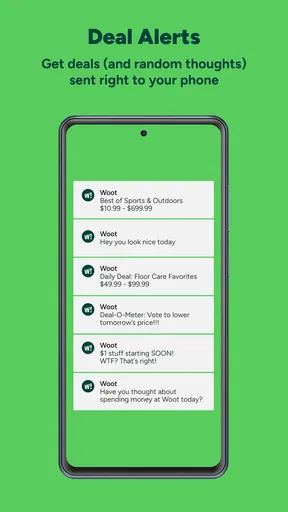
- The app may encourage impulse purchases through frequent notifications and flash sales.
FAQs for Woot! Deals and Shenanigans
What is Woot! Deals and Shenanigans?
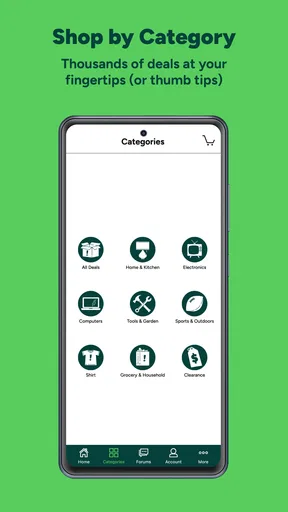
Woot! Deals and Shenanigans is the mobile shopping app for Woot, a deal-focused retailer known for limited-time offers, daily discounts, clearance products, and themed sales events. After installing it, users can browse categories such as electronics, home goods, clothing, tools, and more. The app is designed for shoppers who enjoy discovering changing deals rather than visiting a traditional online store with a fixed catalog.
Is the Woot! app free to download and use?
Yes, Woot! Deals and Shenanigans is generally free to download and use on supported Android and iOS devices. You can browse products, read descriptions, check prices, and place orders without paying for the application itself. However, the cost of products, shipping, taxes, and any applicable membership-related benefits are separate. Availability and app features may vary depending on your country and device.
Do I need an Amazon account to shop through Woot!?
Woot! is part of Amazon, and shoppers may be asked to sign in with an Amazon account when purchasing items or accessing certain account features. This can make checkout more convenient for users who already use Amazon, since saved addresses and payment details may be available. Before ordering, review the account, shipping address, payment method, and final order total carefully.
What types of deals and products can I find in the app?
The app features a rotating selection of discounted merchandise, including consumer electronics, computers, accessories, household items, apparel, tools, kitchen products, and occasional refurbished or open-box goods. Some offers are available only while supplies last or for a limited period, so product availability can change quickly. Read the condition, specifications, seller information, shipping details, and return policy before buying.
Are Woot! purchases reliable, and what should I know about returns?
Woot! is a legitimate shopping service, but the experience can differ depending on the product, condition, fulfillment details, and availability. Some deals may involve refurbished, used, or clearance merchandise, so checking the listing carefully is important. Return eligibility, refund timing, warranty coverage, and shipping rules can vary by item. Always review the current product page and Woot or Amazon policies before completing an order.


